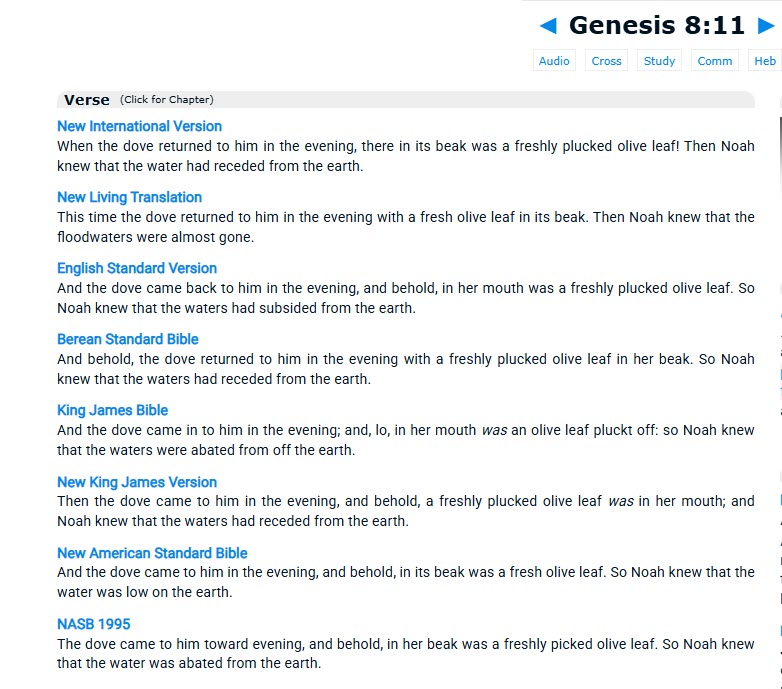
#1UNIVERSAL If the change is universal, then words in the passage that have changed will be the same in the KJV and across all versions.
EXAMPLE: In Genesis 8:11, all versions now say "olive leaf" instead of "olive branch."
Click image to enlarge
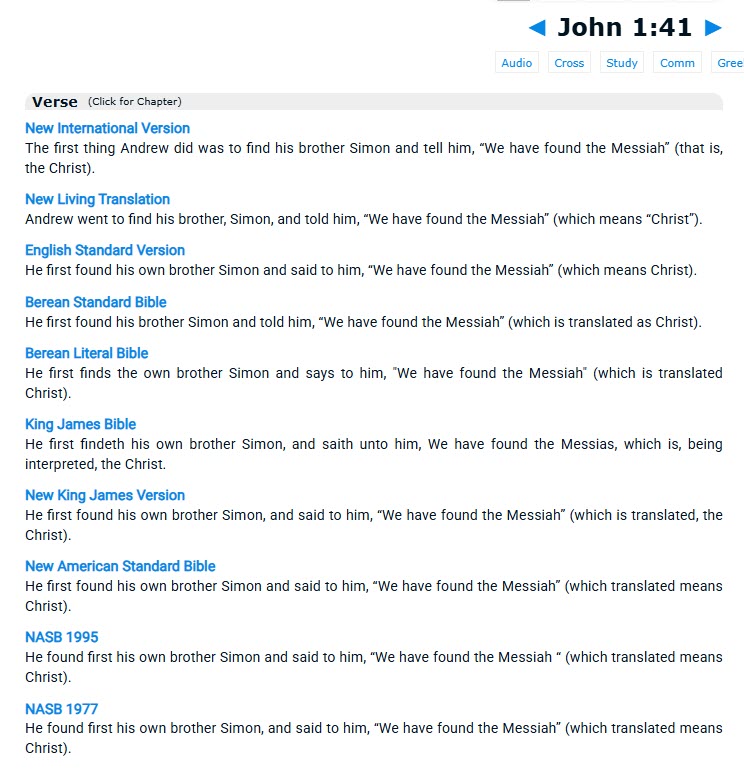
#2KJV ONLY If the change is KJV only, then only the KJV will have an unfamiliar word or words while modern versions will appear to be unchanged.
EXAMPLE: In John 1:41, the rendering of John 1:41 in the KJV now uses the word "Messias" while all modern versions still use the word "Messiah."
Click image to enlarge
#3 UNIVERSAL VARIED
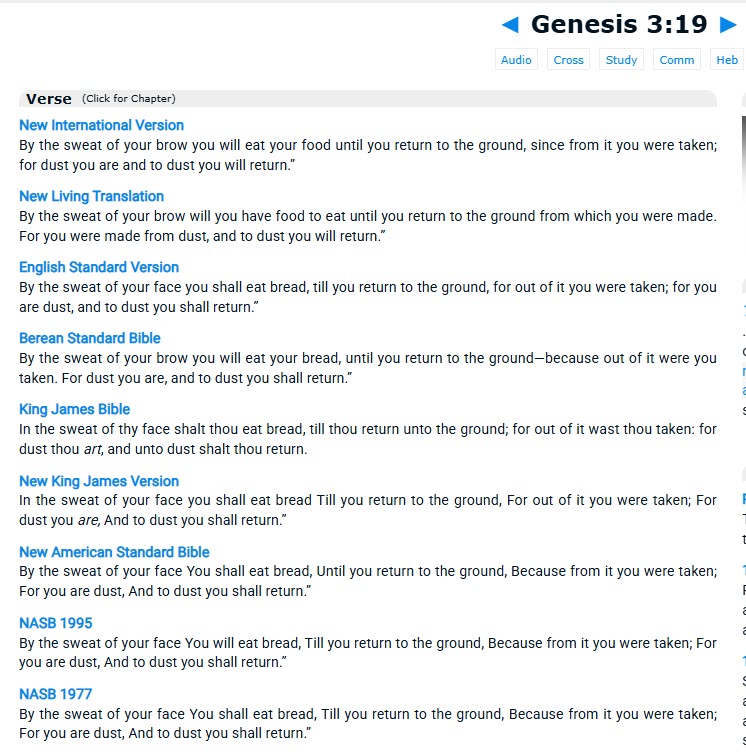
If the change is universal varied, then all versions have changed but the KJV word changes and modern word changes will be different from each other and there will be different variations of the change within the modern versions
EXAMPLE: In Genesis 3:19 the rendering in the KJV “In the sweat of thy face” is unique to the KJV so it’s different from modern versions, but the changed wording across the modern versions contains variations as well. ie “brow” vs “face”
Click to enlarge image
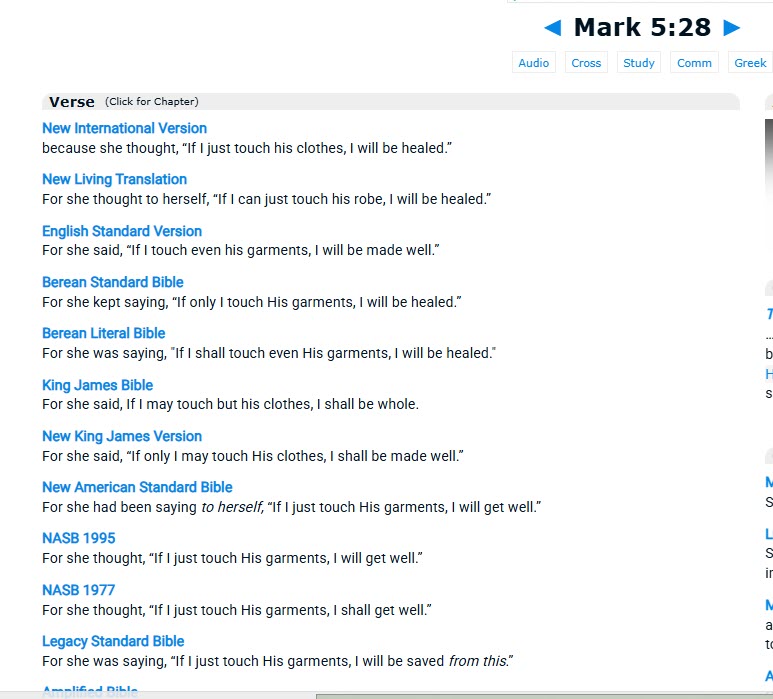
#4 UNIVERSAL MIXED Key words have changed in the KJV and modern versions. Some of the modern versions are the same as the KJV while others are not.
EXAMPLE: In Mark 5:28 we see that the familiar KJV phrase "If I may just touch the hem of His garment" has been replaced with "If I may just touch His clothes. Since the NIV also uses the term "clothes" we categorize this as universal mixed.
Click to enlarge image
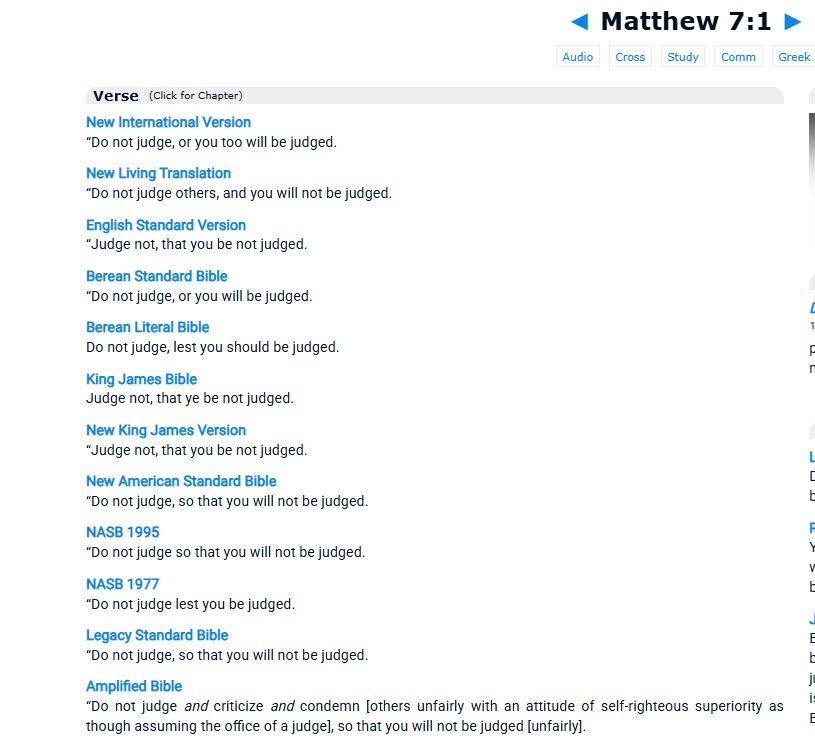
#5 UNIVERSAL UNIQUE Key words have changed in the KJV and modern versions and they are all different from each other.
EXAMPLE: Matthew 7:1 no longer says "Judge not lest ye be judged" and no two versions are the same across all modern versions.